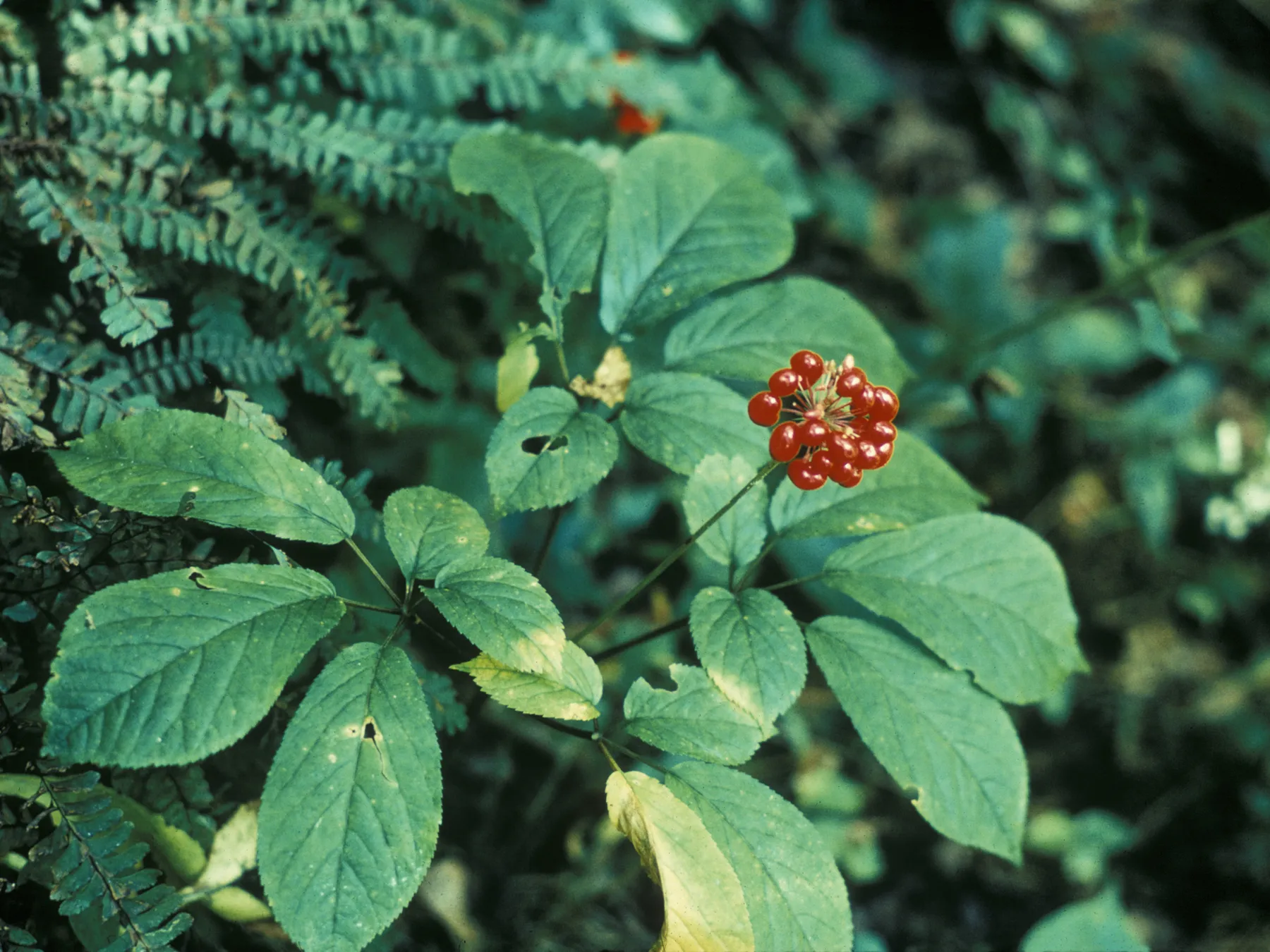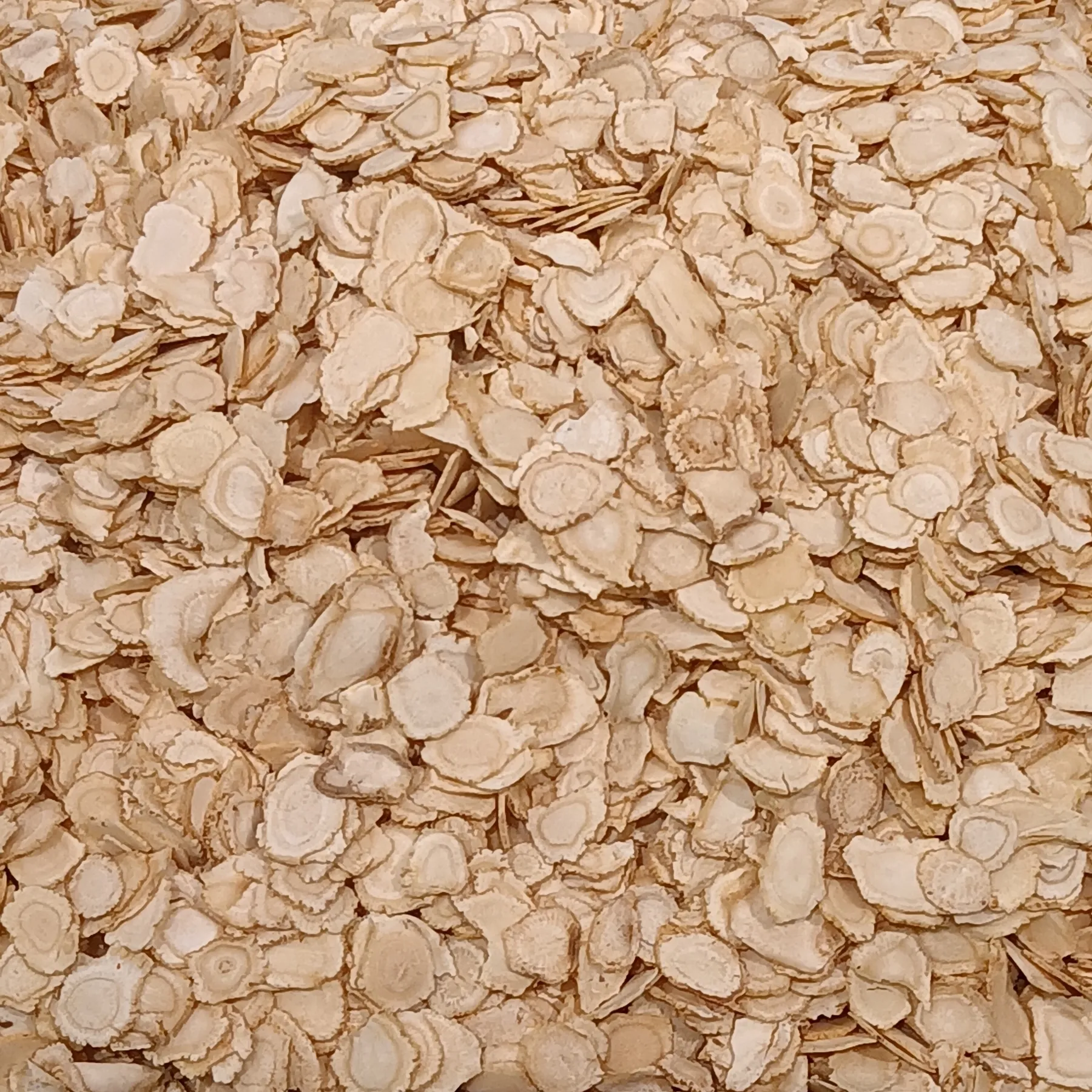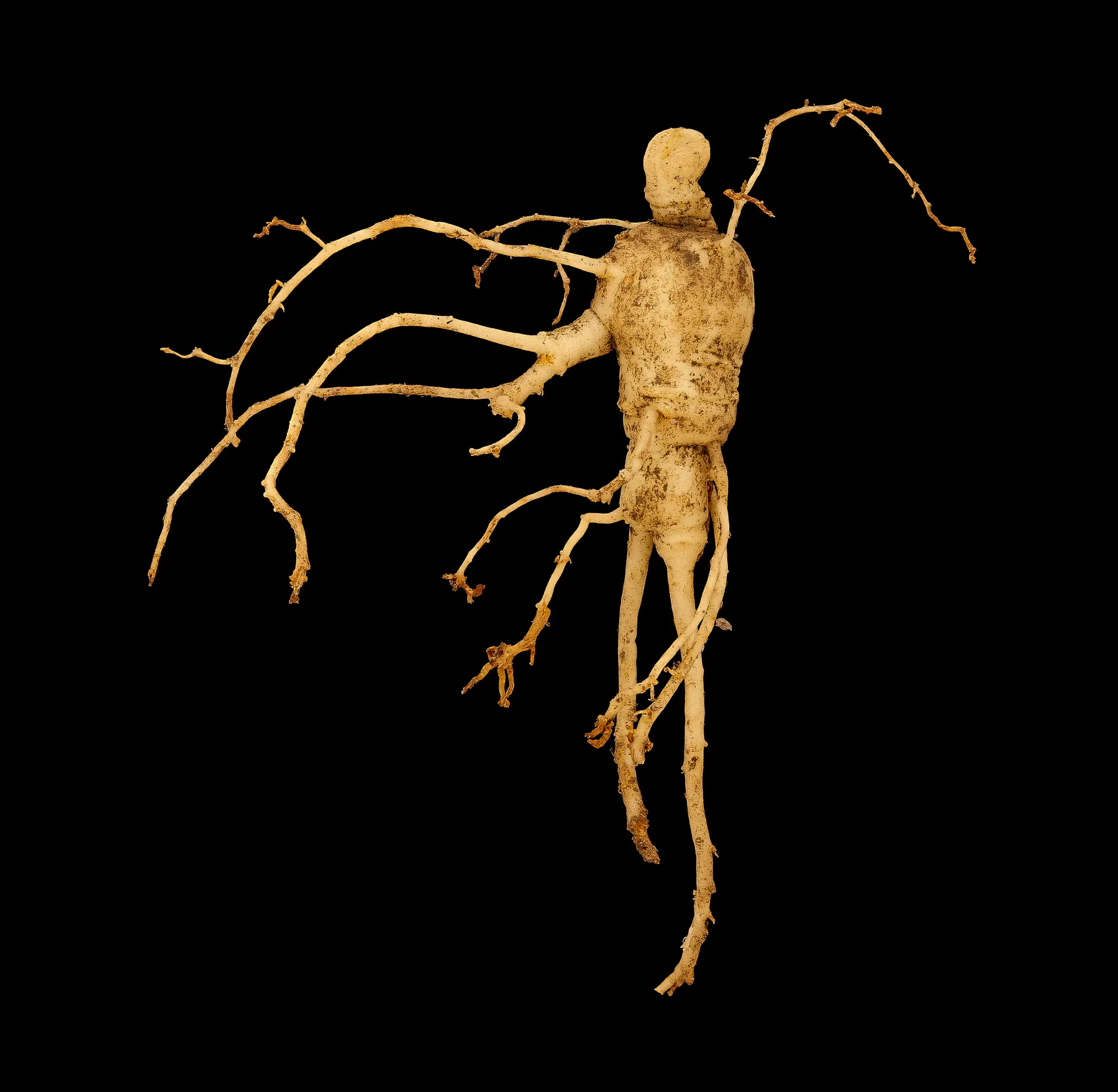
American ginseng (Panax quinquefolius) and Korean ginseng (Panax ginseng) are two different plants, each with its own strengths. They carry different mixes of ginsenosides, the compounds behind most of ginseng's studied effects, and each species has its own set of trials. This page is written from the American side. Our sister site covers the same ground from the Korean side at Korean vs American ginseng, and the three species are laid out together in the three Panax species.
Two Species with Two Chemistries
Korean ginseng grows in Korea and northeast China. American ginseng grows wild in eastern North America and is farmed in Wisconsin and Ontario. A 2026 chemical study of both species found American ginseng carries more of the protopanaxadiol ginsenosides Rb1, Rd and Rc, while Korean ginseng carries more Rg1, and the species was a far stronger influence than the growing year (Yuan 2026). American ginseng also makes pseudoginsenoside F11, an ocotillol type saponin found in this species and not in Korean ginseng. Where human trials of F11 are still ahead, animal work has already shown effects for this American marker (Wu 2026).
Those ratios matter in people. A 2004 trial gave 12 healthy adults eight ginseng types before a sugar drink and found the ratio of protopanaxadiol to protopanaxatriol ginsenosides was the one measured factor that predicted the blood sugar response (Sievenpiper 2004). The researchers behind the American memory trials make the same point: the species has a distinct ginsenoside profile and its effects are distinct from Asian ginseng (Scholey 2010). That distinct profile is the chemistry behind American ginseng's own trials.
Their Blood Sugar Effects Point in Different Directions
In that 2004 trial, 3 grams of American ginseng tended to lower blood sugar at 90 minutes, while 3 grams of Asian ginseng raised the peak and the overall rise (Sievenpiper 2004). In that small study, the clearest sign is that the two roots do different jobs, and American ginseng's own record here is deeper: a 2000 trial of 19 people found 3 grams taken 40 minutes before a sugar drink cut the rise by about a fifth (Vuksan 2000), and a 2019 trial of 24 people with type 2 diabetes found 3 grams of extract a day for 8 weeks lowered HbA1c by 0.29 points (Vuksan 2019).
A 2015 trial gave 13 healthy adults 3 grams of whole root or ethanol extracts of each species. Every preparation blunted the sugar rise to a similar degree, and a 30 percent ethanol extract of Korean red ginseng and a 50 percent extract of American ginseng both raised insulin sensitivity (De Souza 2015). Extraction can bring the two preparations closer, and the American extract still raised insulin sensitivity in that trial. For the full American story see American ginseng for blood sugar.
What American Ginseng Has Trials For
American ginseng has trials for after meal blood sugar, working memory, winter colds and tiredness during cancer treatment. A 2010 trial of 32 young adults found single doses of 100 to 400 mg of a standardised extract improved working memory within hours, and 100 mg raised self rated calmness (Scholey 2010). A 2015 trial of 52 adults aged 40 to 60 repeated the memory gain at 200 mg (Ossoukhova 2015). A 2005 trial of 323 adults found 400 mg a day of a polysaccharide extract over four months cut colds from 0.93 to 0.68 per person (Predy 2005). A 2013 trial of 364 cancer survivors found 2,000 mg a day for 8 weeks eased tiredness, with no extra side effects (Barton 2013). Those four results are the American record buyers use.
What Korean Ginseng Has Trials For
Korean ginseng has a deep record on everyday fatigue, erectile function and immune response. A 2016 review of 12 studies in 630 people found Korean ginseng eased tiredness better than placebo (Bach 2016), and a 2013 trial of 90 people with unexplained fatigue found 1 to 2 grams a day helped within four weeks (Kim 2013). A 2021 Cochrane review of 9 trials in 587 men found Korean ginseng improved erectile function, with most trials using 1.8 to 3 grams of Korean red ginseng a day for 8 to 12 weeks (Lee 2021). A 1996 trial of 227 people found a Korean ginseng extract taken around a flu shot roughly doubled the antibody response (Scaglione 1996). These Korean results stay with Korean ginseng, and American ginseng brings its own trials for blood sugar, memory, colds and cancer fatigue.
Warming and Cooling Is a Long Tradition
Traditional Chinese and Korean medicine classes Korean ginseng as warming and American ginseng as cooling, which is why Chinese buyers reach for xi yang shen, American ginseng, in summer and for people who run hot. Where a 2025 review found the evidence comparing the two species on body heat is scarce (Yang 2025), the American trials show a calm profile: better memory with higher calmness, and steady blood pressure in a 2006 trial of 52 people with hypertension on 3 grams a day for 12 weeks (Stavro 2006). That calm profile is what buyers have sought in the American root for a long time.
Which One You Want
Pick American ginseng (Panax quinquefolius) for steady focus and working memory, for taming the blood sugar rise after meals, for winter colds, and for tiredness during cancer treatment. Pick Korean ginseng (Panax ginseng) for everyday fatigue, erectile function and a stronger flu shot response. Where the goal is stamina, the Korean species has those trials, and where you want energy with a calm edge, the American species is the one many people take for a work day.
What Users Report
People who have tried both species often describe Korean ginseng as warming and energising and American ginseng as gentler and calmer. Many say American ginseng suits a work day and Korean red ginseng suits training or travel. Some keep both and switch by the day. These personal impressions line up with the split in the trials, and the American reports keep coming back to a calm, steady day.
Safety Notes
Both species have good safety records in trials. Side effects with Korean ginseng look similar to placebo in a 2002 safety review (Coon and Ernst 2002), and American ginseng matched placebo across its trials. Where a 2004 trial of 20 healthy adults found two weeks of American ginseng lowered warfarin's blood thinning effect (Yuan 2004), talk with your doctor before taking either species if you take warfarin, diabetes medicines or MAOIs, and both roots were tolerated like placebo in their trials.
For steady focus, after meal blood sugar, winter colds and tiredness during cancer treatment, American ginseng is the species with the trials.
References
- Yuan M et al. 2026. Multivariate Statistical Evaluation of Ginseng Quality and Antioxidant Activity. Molecules.
- Wu C et al. 2026. Pseudoginsenoside-F11: a comprehensive review of chemical structure, pharmacological activities, pharmacokinetics, and therapeutic potential. Front Pharmacol.
- Sievenpiper JL et al. 2004. Decreasing, null and increasing effects of eight popular types of ginseng on acute postprandial glycemic indices in healthy humans: the role of ginsenosides. J Am Coll Nutr.
- Scholey A et al. 2010. Effects of American ginseng (Panax quinquefolius) on neurocognitive function: an acute, randomised, double-blind, placebo-controlled, crossover study. Psychopharmacology (Berl).
- Vuksan V et al. 2000. American ginseng (Panax quinquefolius L) reduces postprandial glycemia in nondiabetic subjects and subjects with type 2 diabetes mellitus. Arch Intern Med.
- Vuksan V et al. 2019. Efficacy and safety of American ginseng (Panax quinquefolius L.) extract on glycemic control and cardiovascular risk factors in individuals with type 2 diabetes: a double-blind, randomized, cross-over clinical trial. Eur J Nutr.
- De Souza LR et al. 2015. Ethanol extraction preparation of American ginseng (Panax quinquefolius L) and Korean red ginseng (Panax ginseng C.A. Meyer): differential effects on postprandial insulinemia in healthy individuals. J Ethnopharmacol.
- Ossoukhova A et al. 2015. Improved working memory performance following administration of a single dose of American ginseng (Panax quinquefolius L.) to healthy middle-age adults. Hum Psychopharmacol.
- Predy GN et al. 2005. Efficacy of an extract of North American ginseng containing poly-furanosyl-pyranosyl-saccharides for preventing upper respiratory tract infections: a randomized controlled trial. CMAJ.
- Barton DL et al. 2013. Wisconsin Ginseng (Panax quinquefolius) to improve cancer-related fatigue: a randomized, double-blind trial, N07C2. J Natl Cancer Inst.
- Bach HV et al. 2016. Efficacy of ginseng supplements on fatigue and physical performance: a meta-analysis. J Korean Med Sci.
- Kim HG et al. 2013. Antifatigue effects of Panax ginseng C.A. Meyer: a randomised, double-blind, placebo-controlled trial. PLoS One.
- Lee HW et al. 2021. Ginseng for erectile dysfunction. Cochrane Database Syst Rev.
- Scaglione F et al. 1996. Efficacy and safety of the standardised ginseng extract G115 for potentiating vaccination against the influenza syndrome and protection against the common cold. Drugs Exp Clin Res.
- Yang Y et al. 2025. The clearing-up of misunderstanding on body temperature changes and heat responses after Panax ginseng or Panax quinquefolium intake. J Ginseng Res.
- Stavro PM et al. 2006. Long-term intake of North American ginseng has no effect on 24-hour blood pressure and renal function. Hypertension.
- Coon JT, Ernst E. 2002. Panax ginseng: a systematic review of adverse effects and drug interactions. Drug Saf.
- Yuan CS et al. 2004. Brief communication: American ginseng reduces warfarin's effect in healthy patients: a randomized, controlled Trial. Ann Intern Med.
Nothing here is medical advice. If you take prescription medication, talk with your doctor before adding American ginseng.