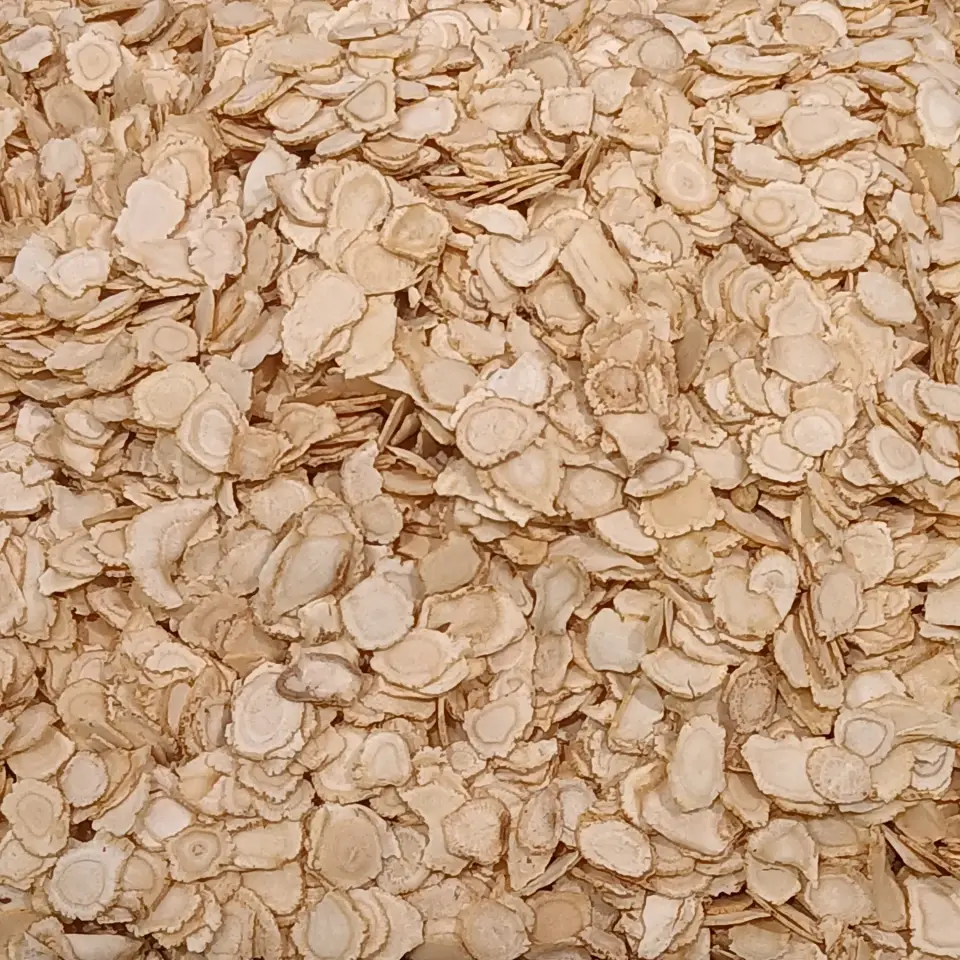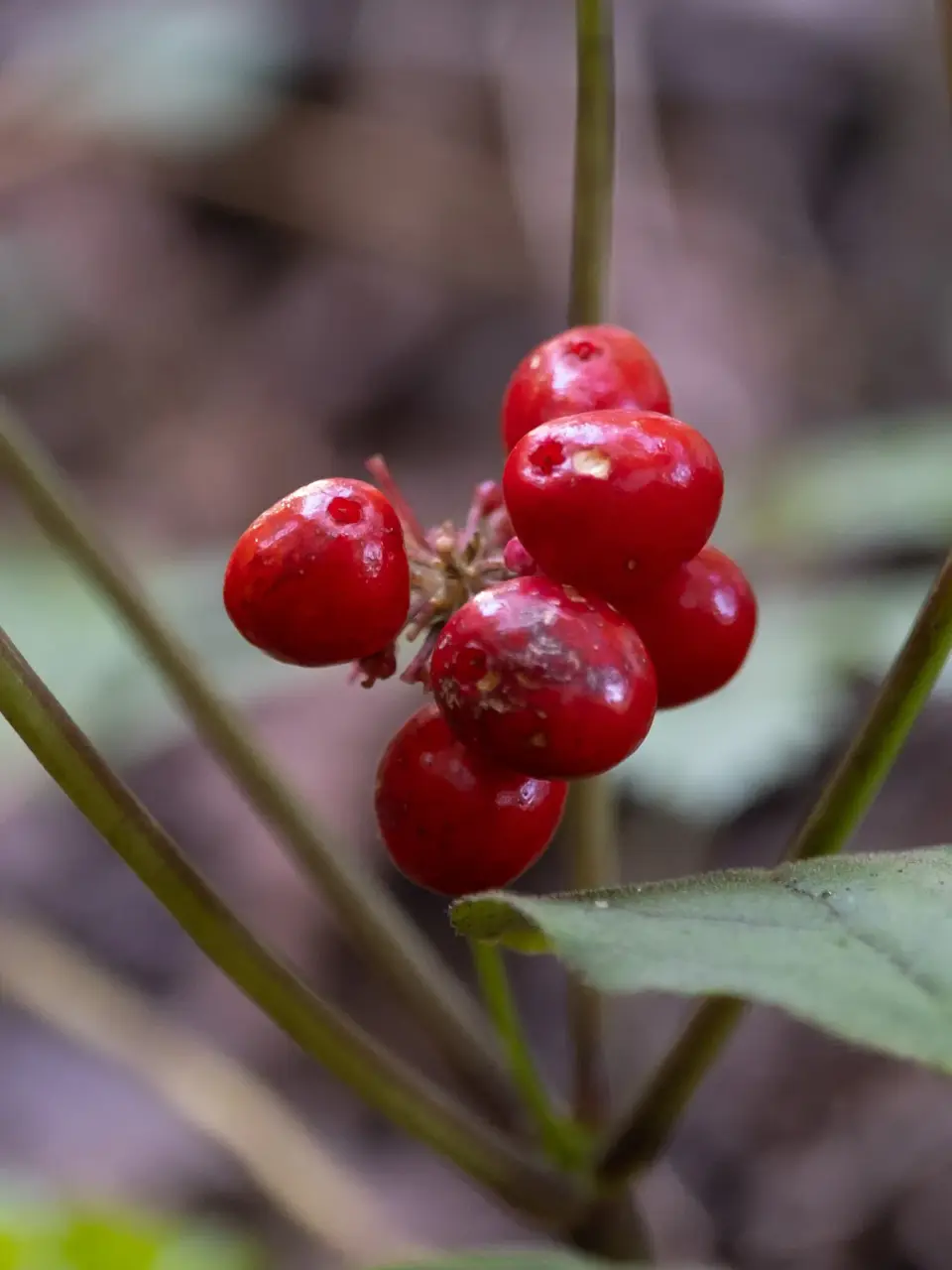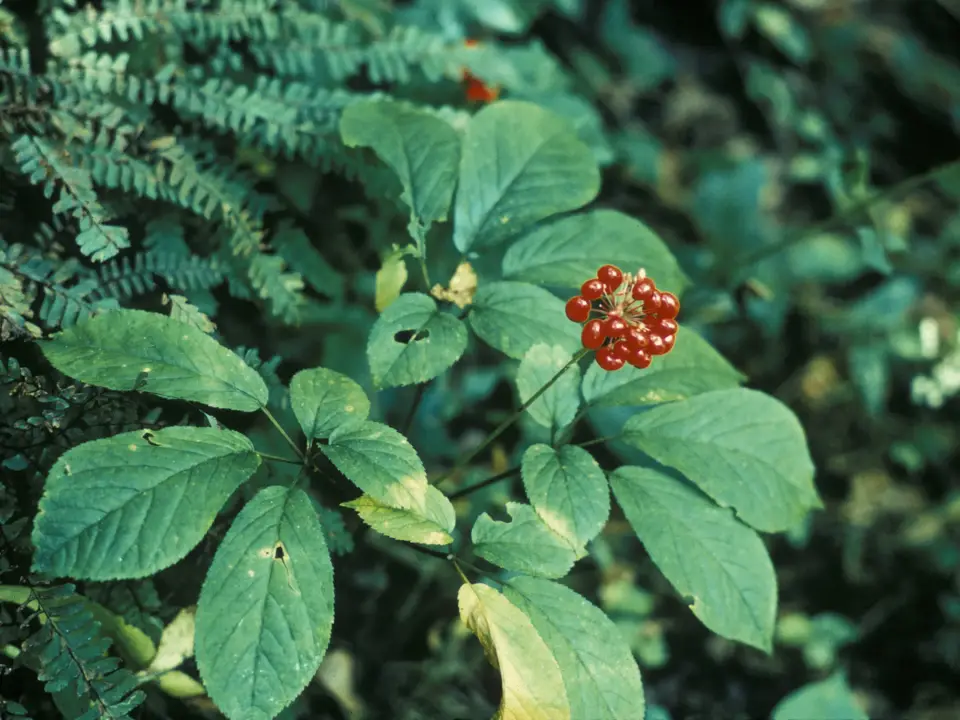
American ginseng (Panax quinquefolius) is the North American species of ginseng, grown mainly in Wisconsin and Ontario. It is a different plant from Korean ginseng (Panax ginseng), with its own mix of ginsenosides, the compounds behind most of ginseng's studied effects, and its own set of trials. Every study on this page used American ginseng. For how the two species compare, see American vs Korean ginseng.
It Blunts the Blood Sugar Rise After a Meal
This is American ginseng's signature finding. A 2000 trial of 19 people, 10 without diabetes and 9 with type 2 diabetes, found 3 grams of root taken 40 minutes before a sugar drink cut the blood sugar rise by about a fifth (Vuksan 2000). Three follow-up trials from the same lab repeated the result with 1 to 9 grams. A 2019 trial of 24 people with type 2 diabetes then found 3 grams a day of extract for 8 weeks, on top of usual treatment, lowered HbA1c, the three month blood sugar average, by 0.29 points (Vuksan 2019). Where one batch with a poor ginsenoside profile did nothing, a sound profile is what carried the after meal drop, and the full story, including timing, is in American ginseng for blood sugar.
It Sharpens Working Memory Within Hours
Working memory is the mental scratchpad you use to hold a phone number while you dial it. A 2010 trial of 32 healthy young adults found single doses of 100 to 400 mg of a standardised extract (Cereboost) improved working memory at one, three and six hours, and the 100 mg dose also raised self rated calmness (Scholey 2010). A 2015 trial of 52 adults aged 40 to 60 found a single 200 mg dose improved working memory at the three hour mark (Ossoukhova 2015). In trials that are small and mostly from one research group, a 2022 trial of 61 young adults found the effect grew after two weeks of daily use, with less mental fatigue (Bell 2022). See American ginseng for focus for the doses that sharpened working memory within hours.
It Cuts Winter Colds Short
A 2005 trial of 323 adults with a history of colds found two 200 mg capsules a day of a polysaccharide rich extract (CVT-E002, sold as COLD-fX) over four months cut colds from 0.93 to 0.68 per person and shortened symptom days from 16.5 to 10.8 (Predy 2005). Two trials in 198 nursing home residents, average age 81 to 83, found fewer confirmed flu cases on the extract, 1 of 97 against 7 of 101 on placebo (McElhaney 2004). Every positive trial used this extract, rich in long chain sugars called polysaccharides, and that extract is what cut the colds and shortened them. See American ginseng for colds.
It Eases Tiredness During Cancer Treatment
This is the largest American ginseng trial ever run. In 2013, 364 cancer survivors at 40 centres took 2,000 mg of Wisconsin ginseng or a placebo a day for 8 weeks. The ginseng group's fatigue score improved by 20 points against 10 on placebo, with the biggest gains in people still in treatment and no extra side effects (Barton 2013). The 2024 ASCO guideline on cancer fatigue, built on 113 trials, says American ginseng may be recommended during treatment (Bower 2024). Where everyday tiredness in healthy people has not had its own trial, the cancer trials and a long use of the root for steady energy are what that use rests on. See American ginseng for fatigue for how 2,000 mg a day eased tiredness over 8 weeks.
It Keeps Blood Pressure Steady
Where old warnings said ginseng raises blood pressure, this species holds the reading steady. A 2006 trial of 52 people with hypertension found 3 grams a day for 12 weeks held 24 hour blood pressure steady, and a kidney marker stayed steady with it (Stavro 2006). In people with type 2 diabetes the root went further. A 2013 trial of 64 people found 3 grams a day for 12 weeks lowered systolic pressure, the top number, by 11.7 percent on top of their usual medicines (Mucalo 2013). That drop, on top of a pressure reading that held steady in hypertension, is the blood pressure strength of a daily course.
It Lowers LDL Cholesterol in Type 2 Diabetes
Two small trials in people with type 2 diabetes point the same way. The 2019 crossover trial of 24 people found 3 grams a day of extract for 8 weeks lowered LDL cholesterol by about 12 percent against placebo (Vuksan 2019). Where a konjac fibre blend shares the credit, a 2018 trial of 30 people paired 3 grams of American ginseng with that blend for 12 weeks and found LDL down 8 percent (Jenkins 2018). Both trials lowered LDL in people with type 2 diabetes.
It Softens Muscle Damage Markers After Hard Exercise
In three small trials in active men, a 2021 trial of 12 men found 1.6 grams a day of extract for 28 days blunted the rise in creatine kinase, a marker of muscle damage, after downhill running (Lin 2021). Where a 2005 crossover trial of 13 men found no gain in running time to exhaustion, the same marker fell after 4 weeks on the root (Hsu 2005). Those lower recovery markers are the strength these trials show after hard exercise.
How Much to Take
The trials used 1 to 3 grams of root before meals for blood sugar, 100 to 400 mg of a standardised extract for working memory, 400 mg a day of the cold extract for four months, and 2,000 mg a day for 8 weeks for cancer fatigue. Each of those amounts is the dose a trial tied to its benefit. See American ginseng dosage.
What Users Report
These are reports from daily use, and many users say American ginseng gives them steady, quiet energy through the workday, the calm species next to Korean ginseng. Regular users commonly report clearer focus in the afternoon and fewer colds over winter. Those reports line up with the trials above, and they describe the same steady energy the studies measured.
Our tolerability guide has the full record, and the root was tolerated like placebo by 364 cancer survivors on 2,000 mg a day for 8 weeks and by 52 people with hypertension on 3 grams a day for 12 weeks.
For the plant itself, its history and its chemistry, see the wiki. American ginseng's trials show steadier blood sugar after meals, sharper working memory, fewer winter colds and less tiredness during cancer treatment.
References
- Vuksan V et al. 2000. American ginseng (Panax quinquefolius L) reduces postprandial glycemia in nondiabetic subjects and subjects with type 2 diabetes mellitus. Arch Intern Med.
- Vuksan V et al. 2019. Efficacy and safety of American ginseng (Panax quinquefolius L.) extract on glycemic control and cardiovascular risk factors in individuals with type 2 diabetes: a double-blind, randomized, cross-over clinical trial. Eur J Nutr.
- Scholey A et al. 2010. Effects of American ginseng (Panax quinquefolius) on neurocognitive function: an acute, randomised, double-blind, placebo-controlled, crossover study. Psychopharmacology (Berl).
- Ossoukhova A et al. 2015. Improved working memory performance following administration of a single dose of American ginseng (Panax quinquefolius L.) to healthy middle-age adults. Hum Psychopharmacol.
- Bell L et al. 2022. A randomized, placebo-controlled trial investigating the acute and chronic benefits of American Ginseng (Cereboost) on mood and cognition in healthy young adults. Eur J Nutr.
- Predy GN et al. 2005. Efficacy of an extract of North American ginseng containing poly-furanosyl-pyranosyl-saccharides for preventing upper respiratory tract infections: a randomized controlled trial. CMAJ.
- McElhaney JE et al. 2004. A placebo-controlled trial of a proprietary extract of North American ginseng (CVT-E002) to prevent acute respiratory illness in institutionalized older adults. J Am Geriatr Soc.
- Barton DL et al. 2013. Wisconsin Ginseng (Panax quinquefolius) to improve cancer-related fatigue: a randomized, double-blind trial, N07C2. J Natl Cancer Inst.
- Bower JE et al. 2024. Management of Fatigue in Adult Survivors of Cancer: ASCO-Society for Integrative Oncology Guideline Update. J Clin Oncol.
- Stavro PM et al. 2006. Long-term intake of North American ginseng has no effect on 24-hour blood pressure and renal function. Hypertension.
- Mucalo I et al. 2013. Effect of American ginseng (Panax quinquefolius L.) on arterial stiffness in subjects with type-2 diabetes and concomitant hypertension. J Ethnopharmacol.
- Jenkins AL et al. 2018. Co-administration of a konjac-based fibre blend and American ginseng (Panax quinquefolius L.) on glycaemic control and serum lipids in type 2 diabetes: a randomized controlled, cross-over clinical trial. Eur J Nutr.
- Lin CH et al. 2021. American Ginseng Attenuates Eccentric Exercise-Induced Muscle Damage via the Modulation of Lipid Peroxidation and Inflammatory Adaptation in Males. Nutrients.
- Hsu CC et al. 2005. American ginseng supplementation attenuates creatine kinase level induced by submaximal exercise in human beings. World J Gastroenterol.
Nothing here is medical advice. If you take prescription medication, talk with your doctor before adding American ginseng.