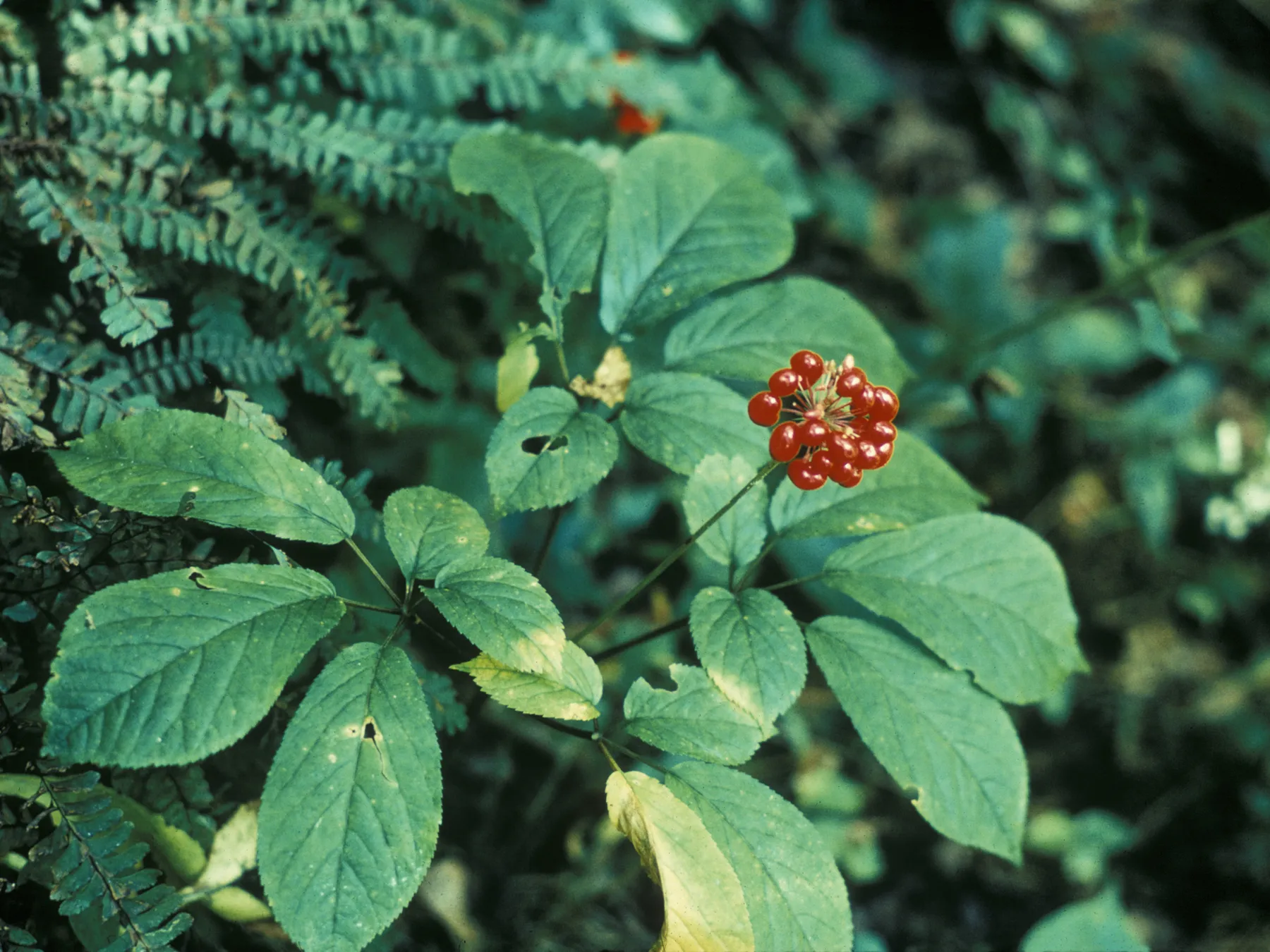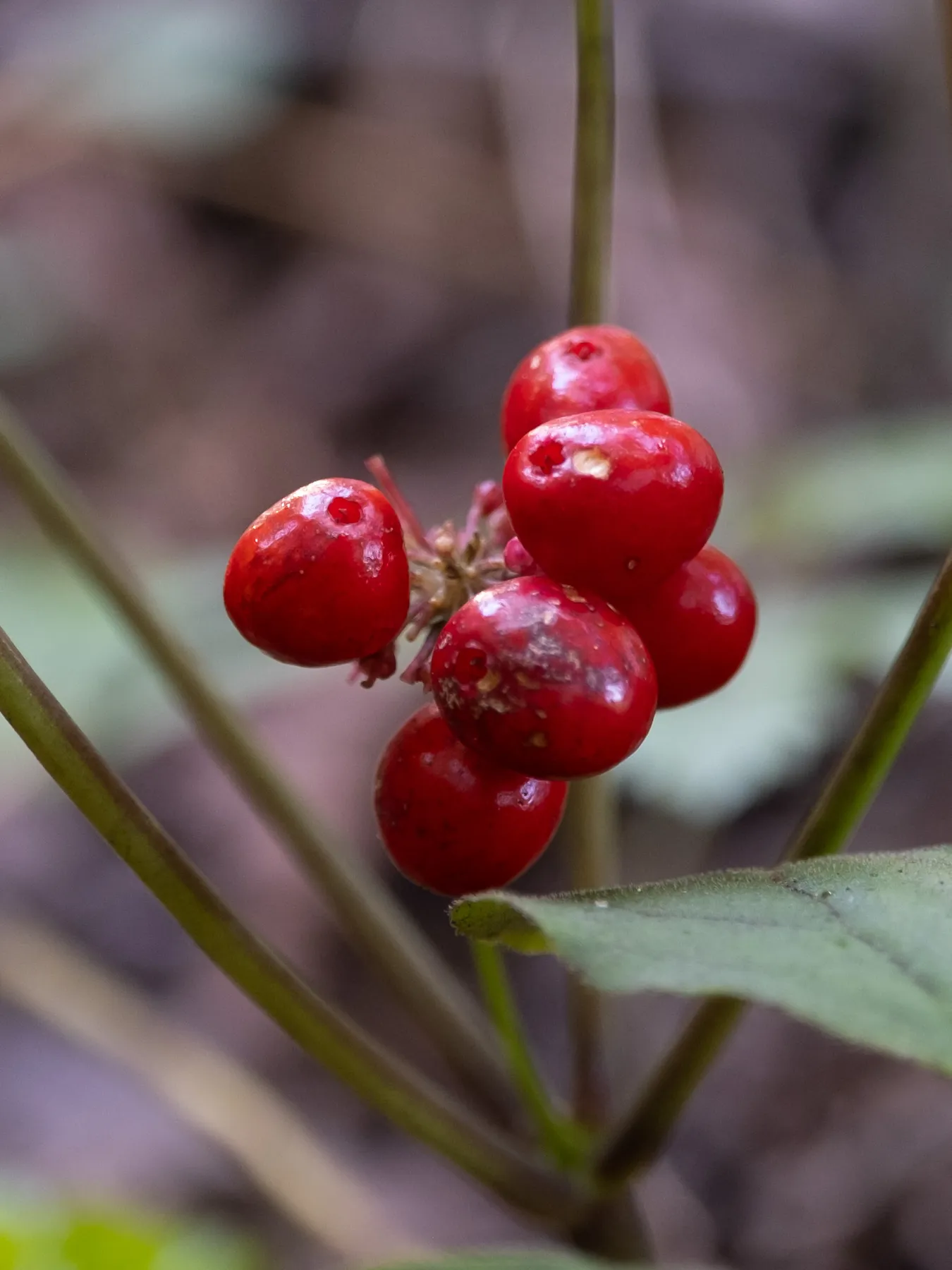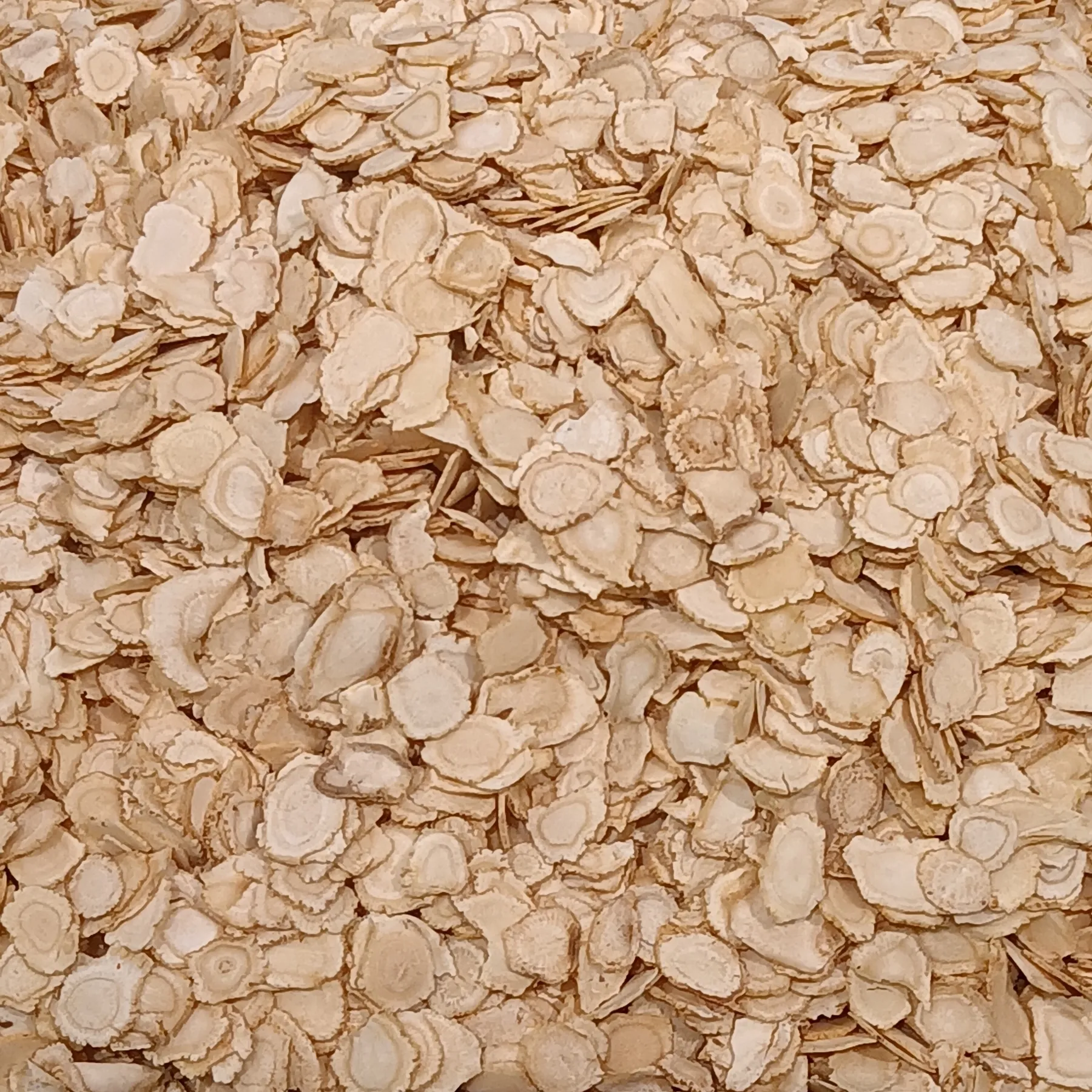
American ginseng's best known effect is on the blood sugar rise after a meal. A run of small crossover trials from one Toronto lab, led by Vladimir Vuksan and John Sievenpiper, found that 1 to 3 grams of ground root taken 40 minutes before a sugary drink cut the rise by roughly a tenth to a fifth, in people with and without type 2 diabetes. An 8 week trial later found a drop in long term blood sugar in people with type 2 diabetes. Here is what each trial found, and how that timing puts the benefit with the meal.
It Lowers the Blood Sugar Spike After a Meal
A 2000 trial of 19 people, 10 without diabetes and 9 with type 2 diabetes, gave each person 3 grams of American ginseng or a corn flour placebo, either 40 minutes before or together with a 25 gram glucose drink (Vuksan 2000). In the people without diabetes, the ginseng cut the total blood sugar rise by 18 percent when taken 40 minutes before the drink. In the people with type 2 diabetes it worked either way, by 19 percent when taken before and 22 percent when taken with the drink.
In that short first study, ground root in capsules, taken ahead of the carbohydrate, cut the rise, and that pattern is what every later trial built on.
Timing Matters More Than Dose
The same lab then tested whether more ginseng, or a longer head start, did more. In a 2001 trial, 12 healthy adults took 0, 1, 2 or 3 grams at 40, 20, 10 or 0 minutes before the glucose drink, 16 visits each (Vuksan 2001). All three doses lowered blood sugar over the last 45 minutes of the test, by 14, 11 and 9 percent, and every one of those doses carried the drop. Where a dose at 20, 10 or 0 minutes did not move the rise in healthy people, the same doses at 40 minutes lowered it.
Going the other way, a 2000 trial of 10 healthy adults found 3, 6 and 9 grams taken 40, 80 or 120 minutes before the drink all worked, by 27, 29 and 39 percent, and the benefit was already there at 40 minutes (Vuksan 2000b). A matching 2000 trial of 10 people with type 2 diabetes found 3, 6 and 9 grams all cut the rise by 15 to 20 percent, and the benefit was already there at 3 grams (Vuksan 2000c). The practical reading is a strength: 1 to 3 grams, about 40 minutes before you eat, is where the after meal drop sits.
It Helps Over Eight Weeks in Type 2 Diabetes
A 2019 crossover trial of 24 people with type 2 diabetes, already on usual treatment, added 1 gram of American ginseng extract with each meal, 3 grams a day, or a placebo for 8 weeks each (Vuksan 2019). Against placebo, the ginseng lowered HbA1c, the three month blood sugar average, by 0.29 percentage points, and fasting blood sugar by 0.71 mmol/L. Systolic blood pressure fell by 5.6 mmHg and LDL cholesterol by about 12 percent. Liver and kidney markers held steady.
On top of usual treatment, the authors called the extract an effective and safe adjunct, with that 0.29 point HbA1c drop sitting beside lower fasting glucose, lower systolic pressure and lower LDL.
With Fibre the Same Direction Held
A 2018 crossover trial of 30 people with type 2 diabetes paired 3 grams of American ginseng with 6 grams of a konjac based fibre blend for 12 weeks, against a wheat bran control (Jenkins 2018). HbA1c came out 0.31 points lower on the combination, and LDL cholesterol 8 percent lower. Where the fibre shares the credit, the combination still moved HbA1c and LDL in the same direction as the 2019 ginseng trial.
A Strong Ginsenoside Profile Carries the Effect
In 2003 the lab tried a new batch. Where 6 grams of that batch, taken 40 minutes before a 75 gram glucose drink, did not move blood sugar or insulin in 12 healthy adults, analysis found it held only 1.66 percent total ginsenosides, below the balance of the batch that had worked (Sievenpiper 2003). The stronger profile is what carried the drop.
A 2007 follow-up tested 9 grams from five Ontario farms in 12 healthy adults (Dascalu 2007). Where two of the five fell short of the expected effect, the five batches together cut the blood sugar rise by 28 percent and the insulin rise by 24 percent. A 2004 trial of eight ginseng types in 12 healthy adults found American ginseng tended to lower the 90 minute blood sugar, while the comparison with Asian ginseng showed the species difference (Sievenpiper 2004).
For buying, three habits find that profile. Buy Panax quinquefolius by name. Prefer a product that states its ginsenoside content. Give that product the 40 minute head start the trials used. See how to choose American ginseng.
How to Use It for Blood Sugar
The trial pattern is 1 to 3 grams of ground root, or 1 gram of extract with each meal, taken about 40 minutes before eating. The benefit was already present at those amounts. The effect is on the meal in front of you, so it pairs with the meals that spike you most, and that is where the smaller rise showed up. For the full picture by goal and form, see American ginseng dosage.
What Users Report
People with prediabetes often report flatter readings on a glucose monitor after a carbohydrate heavy meal when they take the root ahead of it, and many say the effect is clearer at breakfast. Users also commonly report a quiet root, with the change in the numbers. These reports line up with the trials, and they describe the same after meal drop the studies measured.
Safety Notes
Where the 2000 trial noted that in people without diabetes a dose 40 minutes before a meal lowers blood sugar, take it with a meal in view, which is how the trials produced the smaller rise. Where you take diabetes medicines or warfarin, talk with your doctor, since the root may add to the first and a 2004 trial of 20 healthy adults found two weeks of American ginseng lowered the blood thinning effect of the second (Yuan 2004). At the doses tested, people tolerated the root across those trials. See American ginseng side effects.
Taken about 40 minutes before a meal, 1 to 3 grams of American ginseng blunted the after meal rise in these trials.
References
- Vuksan V et al. 2000. American ginseng (Panax quinquefolius L) reduces postprandial glycemia in nondiabetic subjects and subjects with type 2 diabetes mellitus. Arch Intern Med.
- Vuksan V et al. 2001. American ginseng (Panax quinquefolius L.) attenuates postprandial glycemia in a time-dependent but not dose-dependent manner in healthy individuals. Am J Clin Nutr.
- Vuksan V et al. 2000. American ginseng improves glycemia in individuals with normal glucose tolerance: effect of dose and time escalation. J Am Coll Nutr.
- Vuksan V et al. 2000. Similar postprandial glycemic reductions with escalation of dose and administration time of American ginseng in type 2 diabetes. Diabetes Care.
- Vuksan V et al. 2019. Efficacy and safety of American ginseng (Panax quinquefolius L.) extract on glycemic control and cardiovascular risk factors in individuals with type 2 diabetes: a double-blind, randomized, cross-over clinical trial. Eur J Nutr.
- Jenkins AL et al. 2018. Co-administration of a konjac-based fibre blend and American ginseng (Panax quinquefolius L.) on glycaemic control and serum lipids in type 2 diabetes: a randomized controlled, cross-over clinical trial. Eur J Nutr.
- Sievenpiper JL et al. 2003. Variable effects of American ginseng: a batch of American ginseng (Panax quinquefolius L.) with a depressed ginsenoside profile does not affect postprandial glycemia. Eur J Clin Nutr.
- Dascalu A et al. 2007. Five batches representative of Ontario-grown American ginseng root produce comparable reductions of postprandial glycemia in healthy individuals. Can J Physiol Pharmacol.
- Sievenpiper JL et al. 2004. Decreasing, null and increasing effects of eight popular types of ginseng on acute postprandial glycemic indices in healthy humans: the role of ginsenosides. J Am Coll Nutr.
- Yuan CS et al. 2004. Brief communication: American ginseng reduces warfarin's effect in healthy patients: a randomized, controlled Trial. Ann Intern Med.
Nothing here is medical advice. If you take prescription medication, talk with your doctor before adding American ginseng.