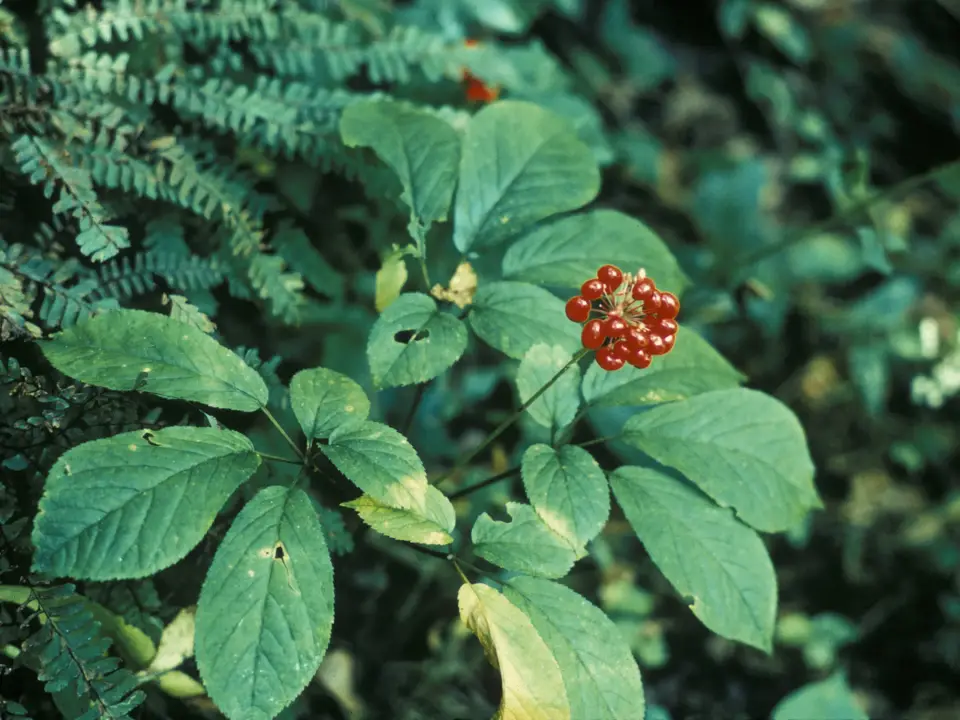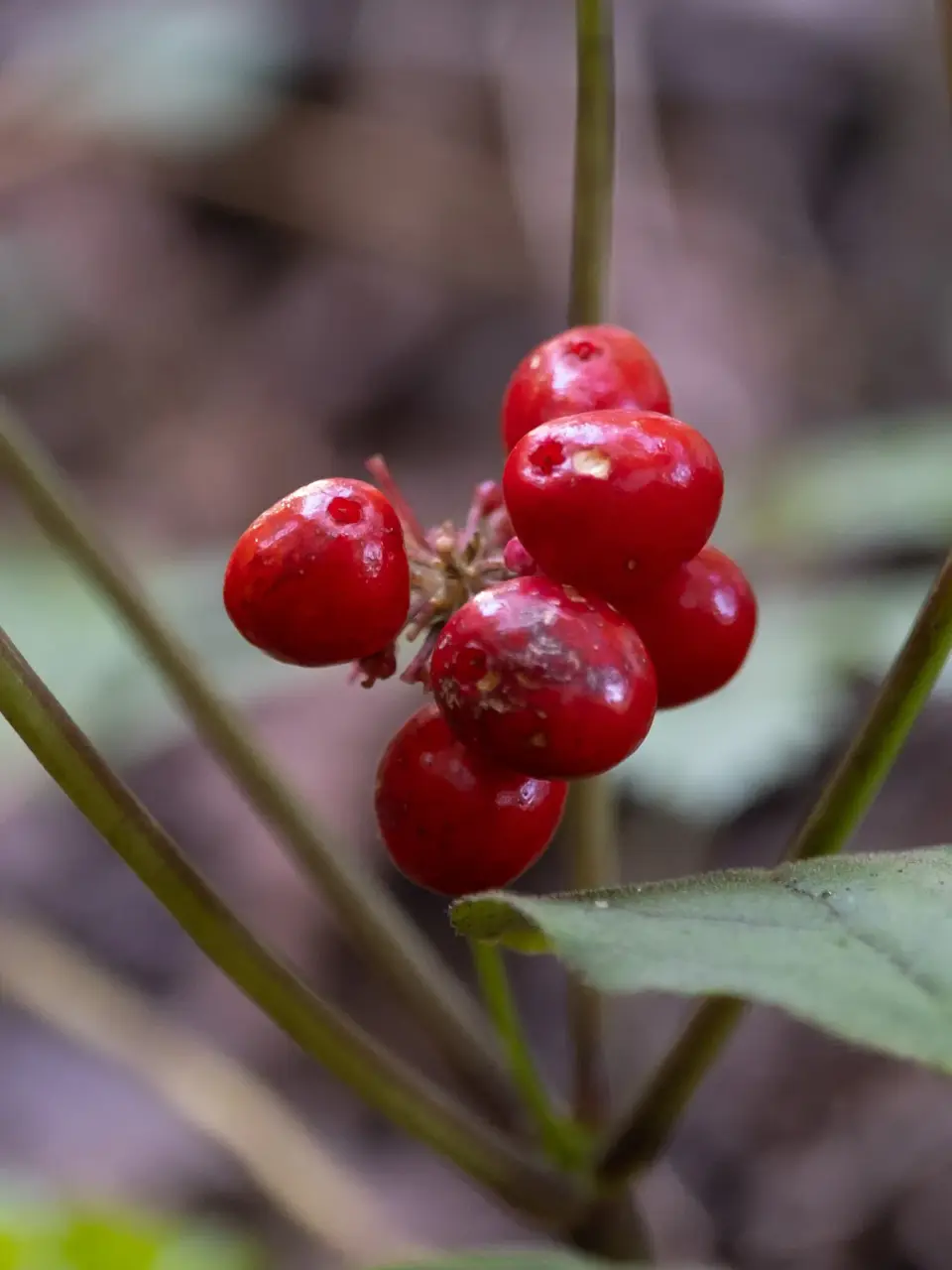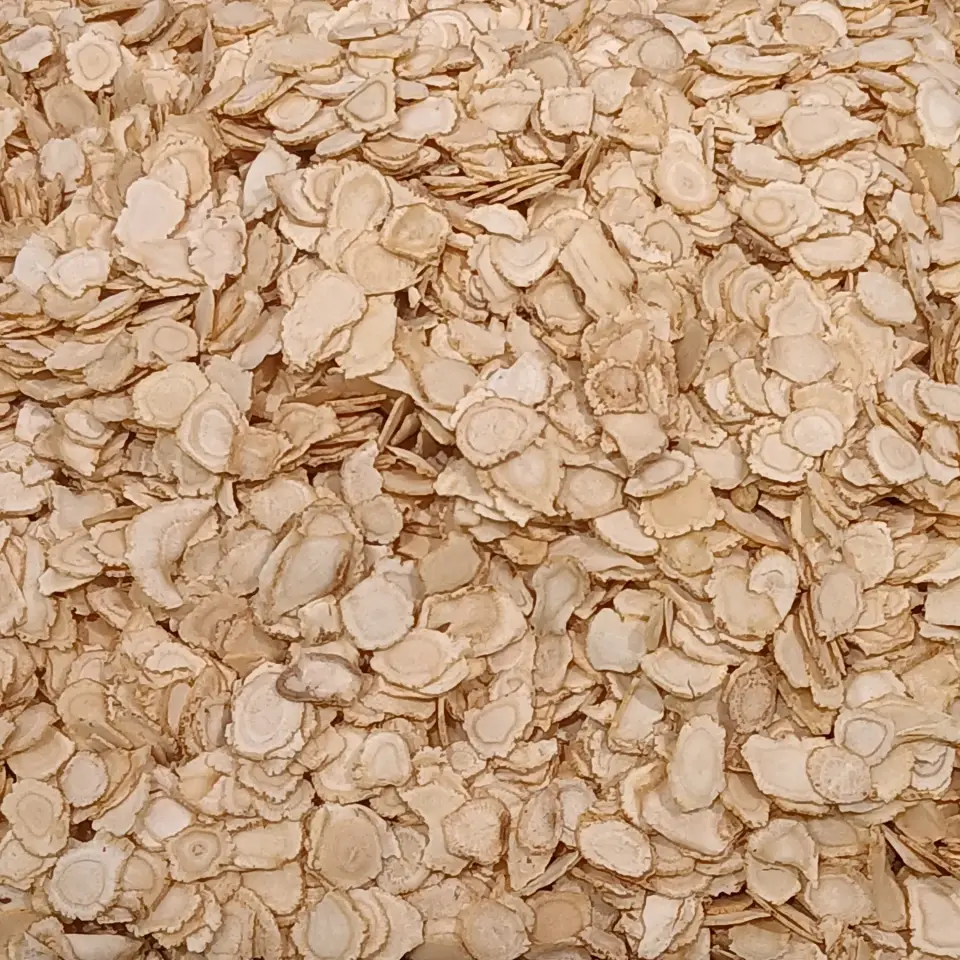
The trials used different forms of American ginseng for different goals, and each form has a dose that delivered a benefit. Blood sugar and fatigue trials used grams of ground root. Memory and cold trials used a few hundred milligrams of a concentrated extract. This guide gives the dose each goal was tested at, and those are the amounts tied to the benefits below.
Grams of Root and Milligrams of Extract Are Not the Same Thing
A root powder capsule is the dried root, ground up. Three grams of root is 3,000 mg of plant material, of which only a few percent is ginsenosides, the compounds most of the research tracks. The roots in the cancer fatigue review contained more than 5 percent ginsenosides (Sadeghian 2021).
An extract concentrates part of the root. The memory trials used Cereboost, an extract standardised to 10.65 percent ginsenosides, so 200 mg of it is a small capsule with a defined content (Scholey 2010). The cold trials used a different extract, CVT-E002, standardised to 80 percent polysaccharides rather than ginsenosides (Vohra 2008). Where 200 mg of one extract and 200 mg of another are different preparations, and neither stands in for 3 grams of root, matching the form to the goal below is what lines the dose up with the trial that worked.
For Blood Sugar: 1 to 3 Grams of Root, 40 Minutes Before a Meal
The 2000 trial of 19 adults, 10 without diabetes and 9 with type 2 diabetes, gave 3 grams of ginseng in capsules either 40 minutes before or together with a 25 gram glucose drink. In people without diabetes the drop came when the root was taken 40 minutes before, and in people with diabetes it came either way (Vuksan 2000). A 2001 crossover trial of 12 healthy adults then tested 1, 2 and 3 grams at 0, 10, 20 and 40 minutes before the drink. All three doses worked equally well, and the benefit showed at 40 minutes (Vuksan 2001).
Where doses above 3 grams added no further drop in type 2 diabetes, a 2000 trial of 10 people compared 3, 6 and 9 grams and found the benefit already present at 3 grams (Vuksan 2000). For daily use, a 2019 crossover trial of 24 people with type 2 diabetes used 1 gram of extract with each meal, 3 grams a day, for 8 weeks on top of usual treatment, and lowered HbA1c by 0.29 points (Vuksan 2019). The 40 minute head start is the timing that carried the drop, and it is covered in full in American ginseng for blood sugar.
For Memory and Focus: 100 to 400 Mg of a Standardised Extract
The 2010 crossover trial of 32 healthy young adults tested single doses of 100, 200 and 400 mg of Cereboost and measured memory at 1, 3 and 6 hours. Working memory improved at all three doses, and 100 mg also raised self rated calmness (Scholey 2010). A 2015 trial of 52 adults aged 40 to 60 used a single 200 mg dose and found the working memory gain at the 3 hour mark (Ossoukhova 2015). A 2022 trial of 61 young adults found the same day effect grew after two weeks of daily use (Bell 2022). Where root powder has not been the form in a memory trial, the standardised extract at 100 to 400 mg is what improved working memory within hours. See American ginseng for focus.
For Colds: 200 Mg Twice a Day of the Polysaccharide Extract
The 2005 trial of 323 adults with a history of colds used two capsules a day of CVT-E002 for 4 months, through the cold season, and found fewer colds and fewer days with symptoms (Predy 2005). Two trials in 198 older adults in care homes used 200 mg twice daily over 8 and 12 weeks (McElhaney 2004). This is a season long dose, started before the colds arrive, and that course is what cut the winter illnesses. See American ginseng for colds.
For Fatigue in Cancer: 1,000 to 2,000 Mg a Day for 8 Weeks
The 2013 trial of 364 cancer survivors used 2,000 mg of Wisconsin ginseng root a day for 8 weeks (Barton 2013). The 2010 dose finding trial of 290 people split 750, 1,000 or 2,000 mg into two daily doses, and the two higher doses showed a trend toward less tiredness and more vitality (Barton 2010). Where 100 to 400 mg a day did nothing for fatigue in a 2011 trial of 56 people with multiple sclerosis (Kim 2011), the 1,000 to 2,000 mg doses are the ones tied to less tiredness during cancer treatment. See American ginseng for fatigue for how 2,000 mg a day eased tiredness over 8 weeks.
For Blood Pressure: 3 Grams a Day for 12 Weeks
A 2006 crossover trial of 52 people with hypertension used 3 grams of root a day for 12 weeks and found 24 hour blood pressure held steady (Stavro 2006). A 2013 trial of 64 people with type 2 diabetes and hypertension used 3 grams of extract a day for 12 weeks on top of their usual medicines and found systolic pressure fell by 11.7 percent (Mucalo 2013). So 3 grams a day is the tested daily dose, it held steady for three months, and in diabetes it lowered the top number.
How Long Before You Notice
Blood sugar is the fastest: the effect shows within the two hours after a meal, when the dose went in 40 minutes before it. Memory is next: the trials measured gains at 1 to 6 hours after a single dose. Fatigue builds over the course. In the 2013 cancer trial the gap from placebo was a trend at 4 weeks and clear at 8 weeks, so the two month mark is where the tiredness score separated. Colds are measured over a season. In a 2006 trial of 43 adults over 65, the difference appeared in the last 2 of the 4 months, with fewer respiratory illnesses on the extract (McElhaney 2006).
How Long the Trials Ran
Most daily use trials ran 4 to 12 weeks: 8 weeks for fatigue and for HbA1c, 12 weeks for blood pressure, 2 weeks for the daily memory trial. The cold trials ran a full 4 months. Where a full year has not been measured, the longest daily use on record in this species is those 4 months, and that season brought fewer colds, with the shorter courses bringing the blood sugar, fatigue, blood pressure and memory results above. Many users take the root in courses of that length, and each tested course delivered the benefit for its goal.
Our tolerability guide has the full record, and the root was tolerated like placebo at 2,000 mg a day for 8 weeks and at 3 grams a day for 12 weeks.
Whichever dose you settle on, the label has to name the real species, and How to choose American ginseng covers what that label should say. At those doses the trials tied American ginseng to steadier blood sugar, sharper working memory, fewer colds and less cancer tiredness.
References
- Sadeghian M et al. 2021. Ginseng and Cancer-Related Fatigue: A Systematic Review of Clinical Trials. Nutr Cancer.
- Scholey A et al. 2010. Effects of American ginseng (Panax quinquefolius) on neurocognitive function: an acute, randomised, double-blind, placebo-controlled, crossover study. Psychopharmacology (Berl).
- Vohra S et al. 2008. Safety and tolerability of North American ginseng extract in the treatment of pediatric upper respiratory tract infection: a phase II randomized, controlled trial of 2 dosing schedules. Pediatrics.
- Vuksan V et al. 2000. American ginseng (Panax quinquefolius L) reduces postprandial glycemia in nondiabetic subjects and subjects with type 2 diabetes mellitus. Arch Intern Med.
- Vuksan V et al. 2001. American ginseng (Panax quinquefolius L.) attenuates postprandial glycemia in a time-dependent but not dose-dependent manner in healthy individuals. Am J Clin Nutr.
- Vuksan V et al. 2000. Similar postprandial glycemic reductions with escalation of dose and administration time of American ginseng in type 2 diabetes. Diabetes Care.
- Vuksan V et al. 2019. Efficacy and safety of American ginseng (Panax quinquefolius L.) extract on glycemic control and cardiovascular risk factors in individuals with type 2 diabetes: a double-blind, randomized, cross-over clinical trial. Eur J Nutr.
- Ossoukhova A et al. 2015. Improved working memory performance following administration of a single dose of American ginseng (Panax quinquefolius L.) to healthy middle-age adults. Hum Psychopharmacol.
- Bell L et al. 2022. A randomized, placebo-controlled trial investigating the acute and chronic benefits of American Ginseng (Cereboost) on mood and cognition in healthy young adults. Eur J Nutr.
- Predy GN et al. 2005. Efficacy of an extract of North American ginseng containing poly-furanosyl-pyranosyl-saccharides for preventing upper respiratory tract infections: a randomized controlled trial. CMAJ.
- McElhaney JE et al. 2004. A placebo-controlled trial of a proprietary extract of North American ginseng (CVT-E002) to prevent acute respiratory illness in institutionalized older adults. J Am Geriatr Soc.
- Barton DL et al. 2013. Wisconsin Ginseng (Panax quinquefolius) to improve cancer-related fatigue: a randomized, double-blind trial, N07C2. J Natl Cancer Inst.
- Barton DL et al. 2010. Pilot study of Panax quinquefolius (American ginseng) to improve cancer-related fatigue: a randomized, double-blind, dose-finding evaluation: NCCTG trial N03CA. Support Care Cancer.
- Kim E et al. 2011. American ginseng does not improve fatigue in multiple sclerosis: a single center randomized double-blind placebo-controlled crossover pilot study. Mult Scler.
- Stavro PM et al. 2006. Long-term intake of North American ginseng has no effect on 24-hour blood pressure and renal function. Hypertension.
- Mucalo I et al. 2013. Effect of American ginseng (Panax quinquefolius L.) on arterial stiffness in subjects with type-2 diabetes and concomitant hypertension. J Ethnopharmacol.
- McElhaney JE et al. 2006. Efficacy of COLD-fX in the prevention of respiratory symptoms in community-dwelling adults: a randomized, double-blinded, placebo controlled trial. J Altern Complement Med.
Nothing here is medical advice. If you take prescription medication, talk with your doctor before adding American ginseng.