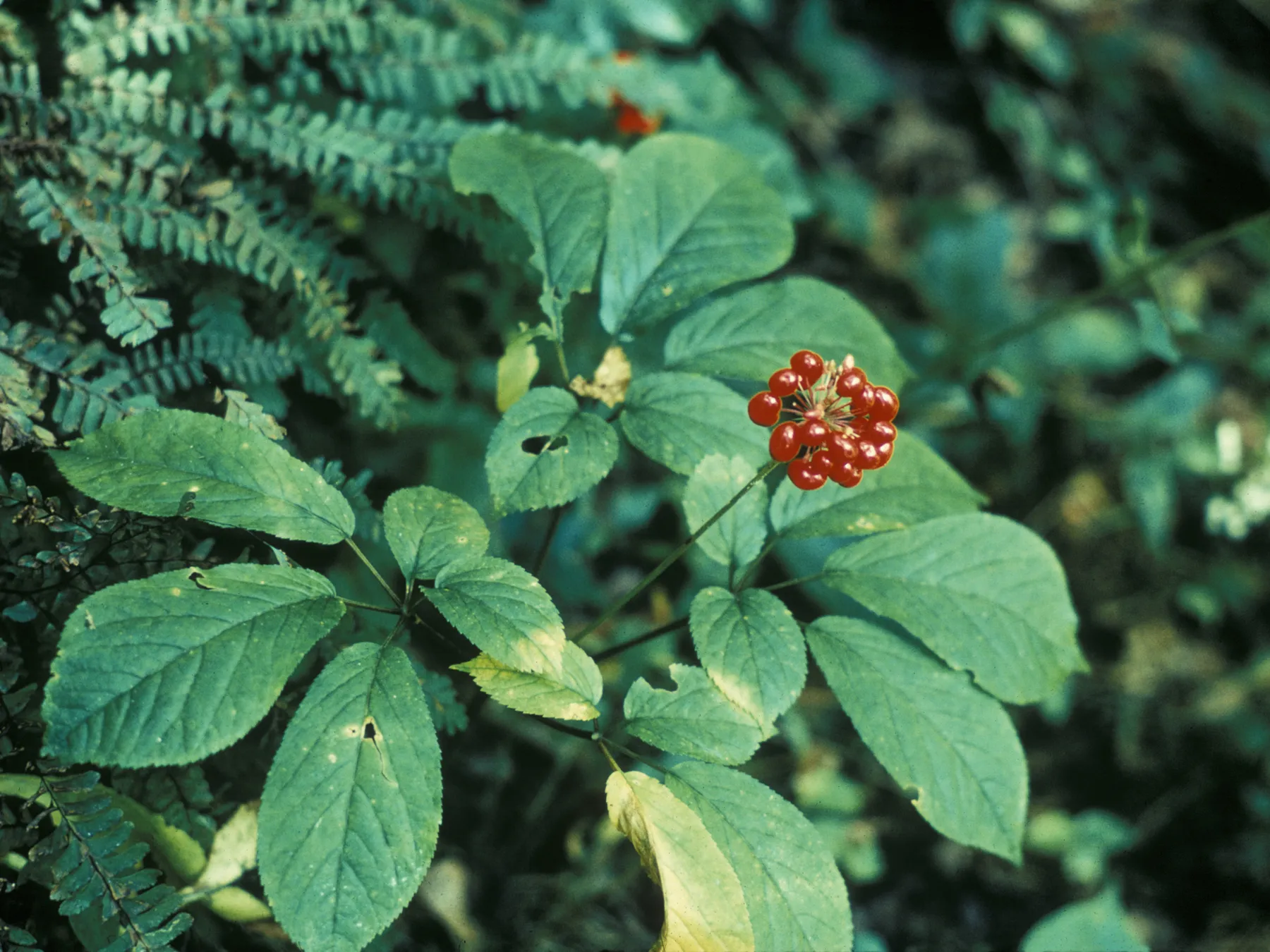
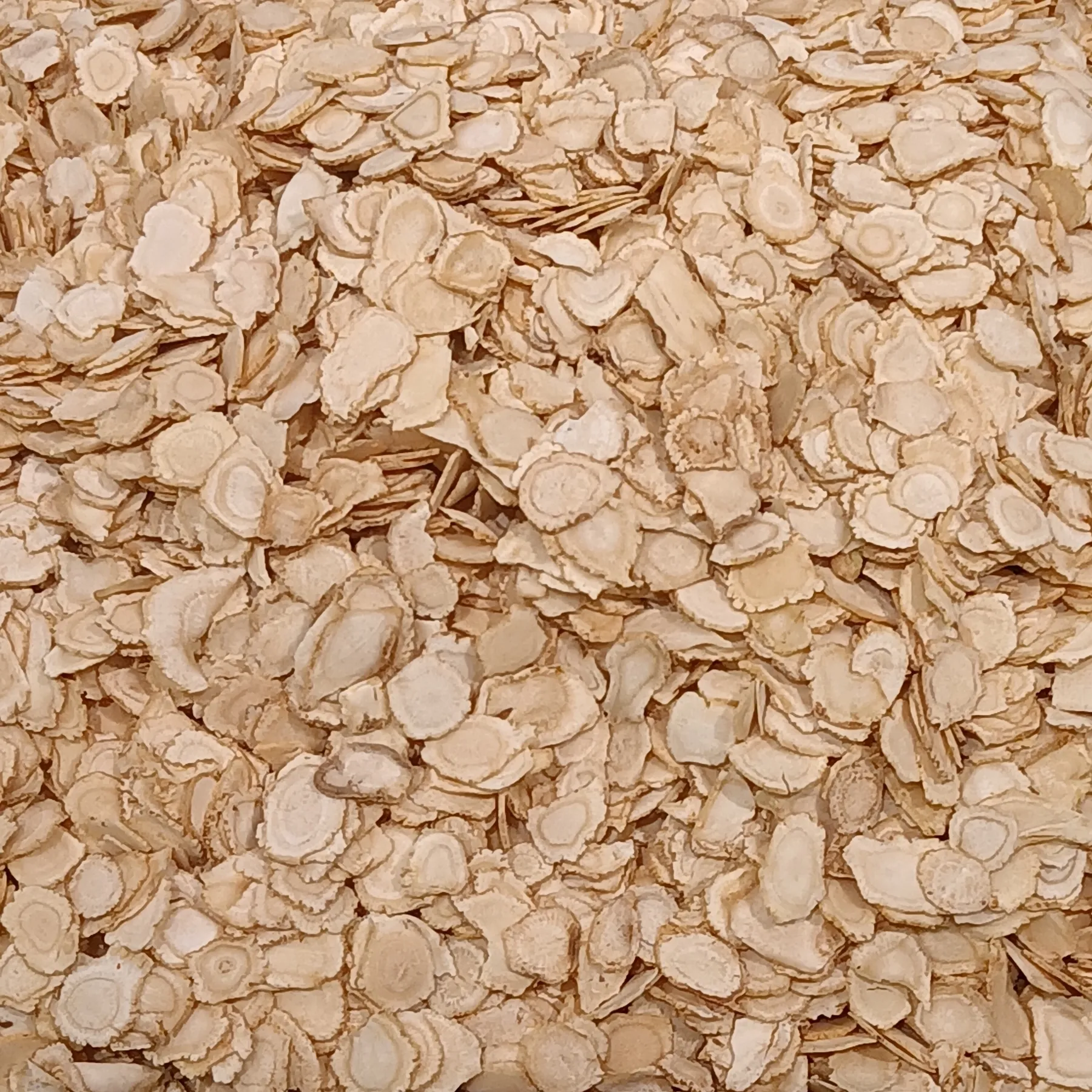
American ginseng (Panax quinquefolius) and notoginseng (Panax notoginseng) share a genus and each has a job people have trusted for a long time. Notoginseng, called sanqi or tianqi in China, is the Chinese species taken for circulation, blood lipids, bruises and recovery. American ginseng is the North American species taken for calm focus, after meal blood sugar and winter colds. This page sets the two side by side; the full three way picture is in the three Panax species, and our sister site covers notoginseng in depth at panaxnotoginseng.com.
Two Roots from Two Continents
Notoginseng grows in the mountains of southwest China, mainly Yunnan, and has been used in Chinese medicine for trauma, pain, heart and circulation problems and bleeding from injury (Wang 2016). American ginseng grows wild from Quebec to Georgia and is farmed in Wisconsin and Ontario, where Chinese buyers know it as xi yang shen, the cooling western root.
The chemistry differs too. A 2011 analysis of nineteen ginsenosides found air dried notoginseng held two to five times more total ginsenosides than American or Asian ginseng (Sun 2011). Notoginseng is rich in notoginsenoside R1, one of the marker compounds that lets a lab tell the Panax species apart (Ji 2023). American ginseng is rich in Rb1 and makes pseudoginsenoside F11, a saponin found in this species alone (Wu 2026). Those markers are why each root keeps its own uses.
What the Notoginseng Trials Cover
Notoginseng has a deep trial record, and people take it for circulation, bruises and recovery. The oral results below are the ones closest to the root people keep for those jobs.
Stroke recovery is the best studied use. A 2023 trial at 67 Chinese hospitals gave 3,072 people with ischemic stroke either notoginseng saponin capsules (Xuesaitong, 120 mg twice a day) or placebo for 3 months, and 89.3 percent of the saponin group could live independently at 3 months against 82.4 percent on placebo (Wu 2023). A 2023 review of 46 trials in 7,957 people pointed the same way, toward more people living independently (Shi 2023). That recovery is what the root is taken for after a stroke.
Angina is next. A 2017 review of 18 trials in 1,828 people with unstable angina found fewer attacks and fewer cardiovascular events (Song 2017). A 2013 review of 17 trials in 1,747 people with coronary heart disease found oral preparations eased angina symptoms (Shang 2013). Fewer attacks and easier symptoms are what people take the root for in coronary disease.
Blood lipids have one pooled result. A 2020 review of 24 trials in 1,918 people with diabetic kidney disease found notoginseng preparations added to usual care lowered total cholesterol by 1.56 mmol/L and LDL cholesterol by 0.94 mmol/L (Tang 2020). Platelets move too: a 2022 review of 20 trials in 2,216 people found notoginseng preparations plus aspirin inhibited platelet clumping more than aspirin alone, without more bleeding (Dai 2022). Those lipid and platelet shifts are part of why the root is taken for circulation.
A 2005 study in 37 rats found powdered notoginseng applied to a cut shortened bleeding time by 29.7 percent against placebo (Fan 2005). People have long kept the root for bruises, bleeding and recovery.
Raw Versus Steamed Is a Long Traditional Distinction
Chinese medicine sells notoginseng two ways. Raw sanqi is taken for bleeding, bruises and "moving blood"; steamed sanqi is taken to build blood after illness or childbirth. The rule is "raw for dispersing, processed for tonifying" (Zeng 2026). Chemistry gives the tradition some footing: steaming lowers dencichine, the compound tied to clotting, and converts the native saponins into rarer ones such as Rg3 and Rk1 (Wu 2026). Where human trials comparing raw with steamed root are still ahead, Chinese medicine has long taken raw sanqi for bruises and bleeding and steamed sanqi for recovery after illness or childbirth.
What American Ginseng Has Trials For
American ginseng's trials sit with calm focus, blood sugar, winter colds and cancer fatigue. A 2000 trial of 19 people found 3 grams of root 40 minutes before a sugar drink cut the blood sugar rise by about a fifth (Vuksan 2000). A 2010 trial of 32 young adults found 100 to 400 mg of a standardised extract improved working memory within hours (Scholey 2010). A 2005 trial of 323 adults found a polysaccharide extract cut winter colds (Predy 2005), and a 2013 trial of 364 cancer survivors found 2,000 mg a day eased tiredness (Barton 2013). Those four results are the American record, and they are why buyers take this species for a clear head and a gentler afternoon.
Different Uses, Different Buyers
Notoginseng buyers are usually people managing circulation, often alongside a Chinese medicine practitioner, or people who keep a bruise and bleeding remedy at home. American ginseng buyers want steady focus, calmer energy, a gentler blood sugar curve after meals and fewer colds. Where the goal is circulation, bruises or recovery, notoginseng is the species with that tradition and those trials. Where the goal is a clear head, blood sugar or winter resilience, American ginseng is the species with the trials for those benefits.
What Users Report
Notoginseng users often describe it as a practical remedy they keep for bruises, nosebleeds, heavy periods or circulation. American ginseng users describe a calm, steady day and fewer afternoon slumps. People who use both tend to keep them for separate jobs. These reports line up with the split above, and the American ones keep coming back to a calm day and a clearer afternoon.
Safety Notes
Where notoginseng changes how platelets behave, and where a 2004 trial of 20 healthy adults found two weeks of American ginseng lowered warfarin's blood thinning effect (Yuan 2004), talk with your doctor before taking either species if you take warfarin, antiplatelet drugs or diabetes medicines. In their trials both roots were tolerated when those medicines were managed with a clinician, and American ginseng matched placebo for side effects across its large courses.
For a clear head, a gentler blood sugar curve and fewer winter colds, American ginseng is the species with the trials.
References
- Wang T et al. 2016. Traditional uses, botany, phytochemistry, pharmacology and toxicology of Panax notoginseng (Burk.) F.H. Chen: A review. J Ethnopharmacol.
- Sun S et al. 2011. Red notoginseng: higher ginsenoside content and stronger anticancer potential than Asian and American ginseng. Food Chem.
- Ji R et al. 2023. Untargeted Metabolomic Analysis and Chemometrics to Identify Potential Marker Compounds for the Chemical Differentiation of Panax ginseng, P. quinquefolius, P. notoginseng, P. japonicus, and P. japonicus var. major. Molecules.
- Wu C et al. 2026. Pseudoginsenoside-F11: a comprehensive review of chemical structure, pharmacological activities, pharmacokinetics, and therapeutic potential. Front Pharmacol.
- Wu L et al. 2023. Efficacy and Safety of Panax notoginseng Saponins in the Treatment of Adults With Ischemic Stroke in China: A Randomized Clinical Trial. JAMA Netw Open.
- Shi X et al. 2023. Efficacy and safety of Panax notoginseng saponins (Xuesaitong) for patients with acute ischemic stroke: a systematic review and meta-analysis of randomized controlled trials. Front Pharmacol.
- Song H et al. 2017. Panax notoginseng Preparations for Unstable Angina Pectoris: A Systematic Review and Meta-Analysis. Phytother Res.
- Shang Q et al. 2013. Oral Panax notoginseng Preparation for Coronary Heart Disease: A Systematic Review of Randomized Controlled Trials. Evid Based Complement Alternat Med.
- Tang X et al. 2020. Panax notoginseng preparations as adjuvant therapy for diabetic kidney disease: a systematic review and meta-analysis. Pharm Biol.
- Dai L et al. 2022. Panax notoginseng preparation plus aspirin versus aspirin alone on platelet aggregation and coagulation in patients with coronary heart disease or ischemic stroke: A meta-analysis of randomized controlled trials. Front Pharmacol.
- Fan C et al. 2005. A comparision of the hemostatic effects of notoginseng and yun nan bai yao to placebo control. J Herb Pharmacother.
- Zeng X et al. 2026. Processing-driven chemical transformations and pharmacological shifts in Panax notoginseng. J Ethnopharmacol.
- Wu Q et al. 2026. From raw to steamed Panax notoginseng: A systematic review of saponin transformations and their functional consequences. Pak J Pharm Sci.
- Vuksan V et al. 2000. American ginseng (Panax quinquefolius L) reduces postprandial glycemia in nondiabetic subjects and subjects with type 2 diabetes mellitus. Arch Intern Med.
- Scholey A et al. 2010. Effects of American ginseng (Panax quinquefolius) on neurocognitive function: an acute, randomised, double-blind, placebo-controlled, crossover study. Psychopharmacology (Berl).
- Predy GN et al. 2005. Efficacy of an extract of North American ginseng containing poly-furanosyl-pyranosyl-saccharides for preventing upper respiratory tract infections: a randomized controlled trial. CMAJ.
- Barton DL et al. 2013. Wisconsin Ginseng (Panax quinquefolius) to improve cancer-related fatigue: a randomized, double-blind trial, N07C2. J Natl Cancer Inst.
- Yuan CS et al. 2004. Brief communication: American ginseng reduces warfarin's effect in healthy patients: a randomized, controlled Trial. Ann Intern Med.
Nothing here is medical advice. If you take prescription medication, talk with your doctor before adding American ginseng.